
Namma Metro Pink Line Impact on Bannerghatta Road
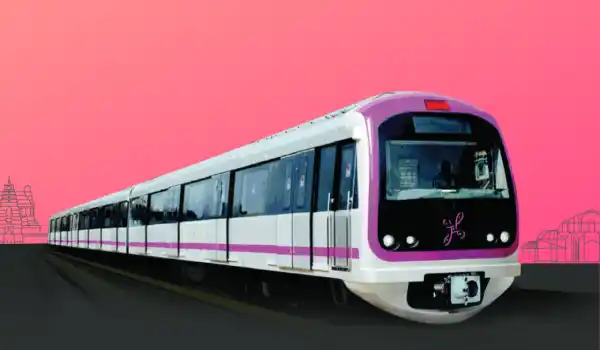
Urban infrastructure has consistently directed real estate expansion in Bangalore. Among current developments, the Namma Metro Pink Line stands out as a structural catalyst. Its alignment directly influences the trajectory of Bannerghatta Road property investment, strengthening the corridor’s long-term fundamentals. For South Bangalore, this metro corridor represents more than improved transit—it signals measurable economic and residential acceleration.
The Namma Metro Pink Line Impact on Bannerghatta Road is already visible in buyer sentiment, investor movement, and project positioning. As Bangalore metro Phase 2 impact unfolds, the stretch transitions from a traffic-sensitive zone to a South Bangalore metro corridor with structured accessibility.
What Is the Namma Metro Pink Line?
The Pink Line forms a critical segment of Bengaluru’s Phase 2 expansion. It connects Kalena Agrahara to Nagawara, integrating southern residential pockets with northern employment districts. This alignment strengthens Bangalore urban mobility expansion and supports integrated transport network Bangalore planning objectives.
Key structural highlights:
- Connects Kalena Agrahara to Nagawara
- Direct metro access from Kalena Agrahara metro station
- Strengthens South Bangalore infrastructure projects
- Enhances public transport accessibility Bangalore
- Enables transit-oriented development Bangalore
For residents along Bannerghatta Road, this connectivity ensures direct access to the Central Business District, North Bangalore growth nodes, and high-density employment clusters without dependence on peak-hour road congestion.
Bannerghatta Road as a Metro-Driven Growth Corridor
Bannerghatta Road has matured into a stable residential and institutional axis. Educational campuses, hospitals, and corporate offices have shaped consistent demand. However, traffic bottlenecks limited its full potential.
The Pink Line resolves that constraint. Once operational, Metro connectivity near Bannerghatta Road transforms commuting reliability and daily efficiency. The corridor evolves into a metro-connected apartments in South Bangalore hotspot backed by infrastructure clarity.
This shift strengthens:
- Bannerghatta Road real estate growth
- Infrastructure-driven property appreciation
- Future growth hotspots in Bangalore positioning
Measurable Benefits of the Pink Line Integration
1. Reduced Travel Time Across Key Zones
Metro access reduces commute duration to:
- Central Business District
- Electronic City
- MG Road commercial district
- North Bangalore employment clusters
This reduction directly enhances residential appeal and supports work-life balance homes Bangalore demand patterns.
2. Capital Appreciation Momentum
Historical metro corridors in Bengaluru demonstrate price resilience once connectivity activates. The Pink Line supports:
- Metro corridor price growth Bangalore
- Stronger capital appreciation near metro stations
- Improved ROI on Bannerghatta Road properties
As infrastructure execution progresses, market adjustments typically follow an upward trajectory.
3. Rental Market Acceleration
Professionals prioritize proximity to reliable transit. Bannerghatta Road’s adjacency to IT corridors already supports consistent tenancy. The Pink Line amplifies:
- Rental yield near metro Bangalore
- Higher occupancy rates
- Increased preference for gated community near metro station residences
This strengthens long-term income potential for investors.
Impact on Large-Scale Residential Developments
Major developments, including Godrej Bannerghatta Road, align closely with metro expansion. Spread across 33 acres, the project offers 1, 2, and 3 BHK apartments within a structured township framework.
Currently in pre-launch and awaiting RERA approval, the project benefits from its position within the South Bangalore metro corridor. Infrastructure proximity enhances:
- Project visibility
- Buyer confidence
- Resale liquidity
- Long-term valuation
Metro adjacency converts residential positioning into connectivity-driven housing demand momentum.
Commercial Expansion and Social Infrastructure Strengthening
The Namma Metro Pink Line Impact on Bannerghatta Road extends beyond residential appreciation. Transit hubs naturally attract retail, hospitality, and office growth.
Expected developments include:
- Expansion of neighborhood commercial clusters
- Strengthening of healthcare institutions
- Growth of education-linked real estate demand
This pattern aligns with Smart city infrastructure Bangalore planning objectives and structured urban expansion.
Long-Term Urban Transformation
Metro projects reflect multi-decade planning cycles. The Pink Line supports:
- Sustainable commuting patterns
- Reduced vehicular dependency
- Organized urban density management
- Structured Bangalore real estate infrastructure impact
Bannerghatta Road transitions into a fully integrated growth axis under this framework.
Investment Timing and Strategic Positioning
Infrastructure announcements often create early-entry advantages. While execution timelines extend across phases, pricing behavior typically responds earlier.
Bannerghatta Road already demonstrates:
- Established residential absorption
- Proximity to employment corridors
- Strong social infrastructure foundation
The metro introduces the missing connectivity component. Consequently, the corridor advances from stable residential belt to strategic long-term growth zone within Bangalore’s expanding metro grid.
Conclusion
The Namma Metro Pink Line Impact on Bannerghatta Road is both structural and financial. It enhances accessibility, supports sustained infrastructure-driven property appreciation, and strengthens the corridor’s standing within future growth hotspots in Bangalore.
Metro expansion does not merely reduce commute time. It redefines urban economics. For Bannerghatta Road, the Pink Line cements its position as a connectivity-backed residential destination with long-term stability and measurable investment relevance.